

New Space España closes its fourth edition with collaboration and autonomy as key drivers for the future of the space sector
September 25, 2026
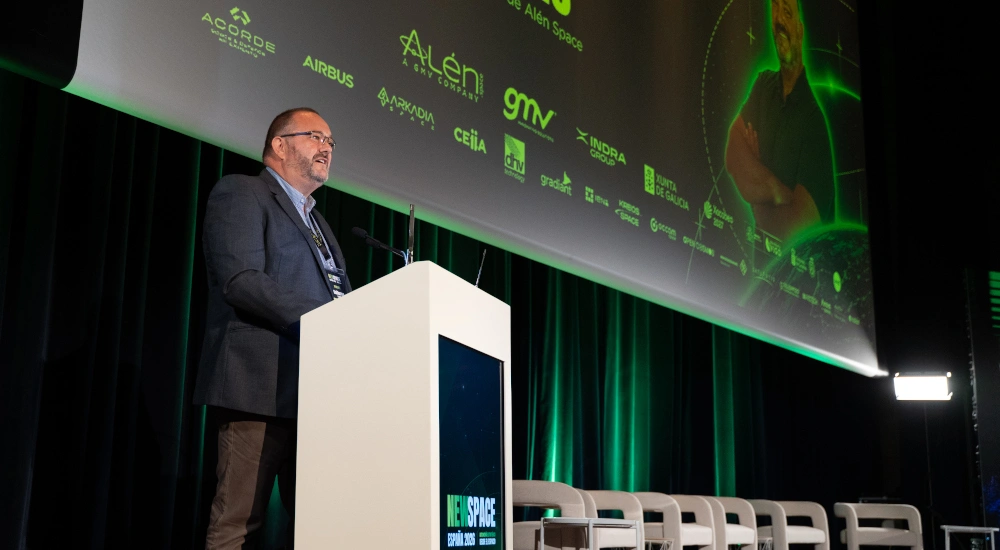
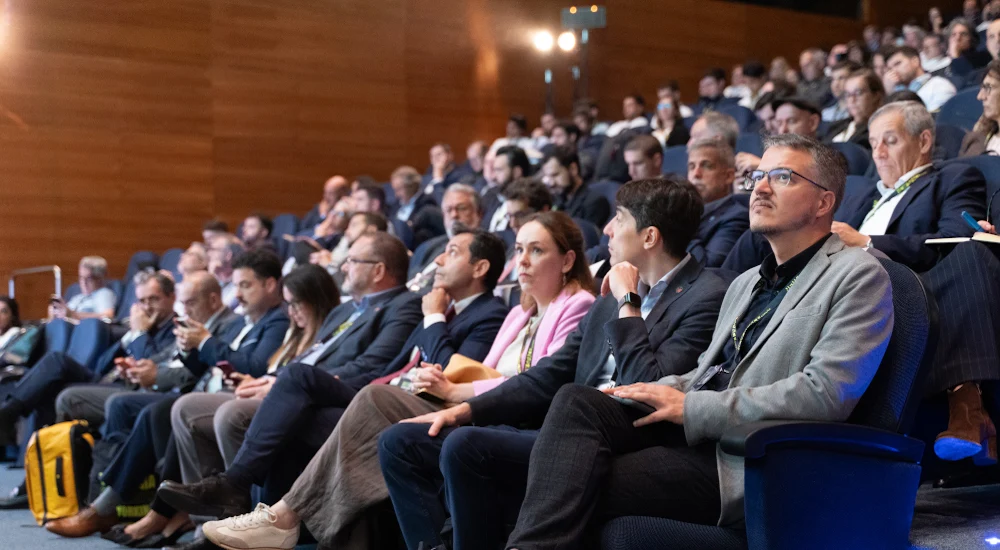
The fourth edition of New Space España brought together more than 280 professionals, 130 companies and 45 speakers from the Spanish space industry. Held in Vigo on 24 and 25 September, the event, organised by Alén Space, gathered representatives from companies, public administrations, agencies, technology centres and universities to discuss the challenges that will shape the future of the sector in Spain and Europe.
Strategic sovereignty, technological autonomy, stronger links between research and industry, public-private collaboration, the development of industrial capabilities in a dual-use environment, and security and defence challenges were among the main themes addressed at New Space España 2026.
The conference, promoted by Alén Space, received institutional support from the Xunta de Galicia, the Government of the Canary Islands, the Tenerife Island Council, the Vigo Free Trade Zone Consortium (CZFV) and the University of Vigo, and was sponsored by GMV, Indra Group, Acorde Technologies, Airbus, Arkadia Space, CEiiA, DHV Technology, Gradiant, IENAI Space, Kreios Space, OCCAM Space, Open Cosmos, Rohde & Schwarz, Satlantis, Telespazio Ibérica, Aistech, Ansys, Radian, and UARX Space.
The institutional opening featured David Regades, Special State Representative for the Vigo Free Trade Zone Consortium; Teresa Riesgo, Secretary General for Innovation at the Ministry of Science, Innovation and Universities; Román Rodríguez, Regional Minister for Education, Science, Universities and Vocational Training of the Xunta de Galicia; and Abel Caballero, Mayor of Vigo. The institutional representatives highlighted the progress made by Spain’s space sector and the opportunities to strengthen its position in Europe.
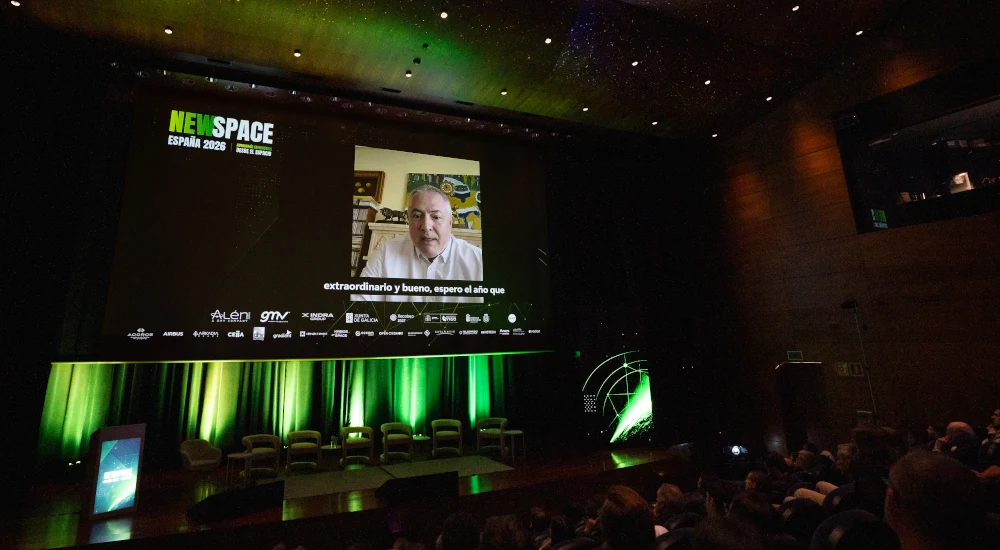
The institutional closing of the first day included a video message from Juan Carlos Cortés, Director of the Spanish Space Agency, who highlighted the changes taking place across Europe and Spain: “Europe is aware that it needs to make decisions, and changes are taking place across the sector.” In Spain, he noted, the starting point is already a consolidated and competitive industry, but one that must continue to evolve in order to adapt to a changing environment. Cortés said that this transformation process has already begun at grassroots level, with initiatives aimed at driving new projects and companies, and stressed that “this transformation is robust and there is no turning back.”
Guillermo Lamelas, CEO of Alén Space and organiser of the event, welcomed attendees with an address focused on the current challenges facing the space industry and the need to turn Europe’s existing investment and capabilities into greater competitiveness.
Lamelas highlighted the disparity in the scale of public funding allocated to the space sector in Europe and the United States, and stressed the need for European industry to make the most of the resources available. He also pointed to talent as one of the key pillars for strengthening the sector: “We need to invest in training programmes, attract talent, and build careers in space.”
Sovereignty and autonomy to strengthen European capabilities
The first round table of the opening day, ‘Sovereignty and autonomy: the industry’s perspective’, brought together representatives from Indra Space, Airbus, GMV, DHV Technology, Satlantis, and the Ministry of Science, Innovation and Universities to discuss the capabilities Europe needs to increase its autonomy and strengthen the competitiveness of its industry.
The morning continued with the conference ‘Celeste Mission: towards a future European LEO-PNT constellation’, delivered by Íñigo Mascaraque, Head of Operations and Ground Segment for Celeste at the European Space Agency (ESA). During his presentation, Mascaraque addressed the growing international interest in integrating low-Earth orbit satellite systems into positioning, navigation, and timing infrastructure, an area already being explored through a range of initiatives in Europe and other international markets. The ESA representative presented the progress made by Celeste during its initial demonstration phase and highlighted the results achieved in signal generation and navigation performance.
Later, David Pérez-Dionis, Director General for Organisational Coordination and Strategic Projects at the Government of the Canary Islands, and Juan José Martínez, Councillor for Research, Innovation and Development at the Tenerife Island Council, introduced the Canary Islands Aerospace Strategy and Tenerife Space Horizon. Pérez-Dionis explained that the aim is to position the Canary Islands on the international aerospace map, while Martínez focused on Tenerife, noting that “of the €80 million committed, €70 million is already under way”, reflecting the level of implementation of the strategy.
The programme continued with the round table ‘Public-private collaboration: key to strengthening the space sector’, featuring representatives from Xesgalicia, CCDR-Norte, Arkadia Space, APEC-IEEC, AVS, and the European Space Agency.
To close the morning session on the first day of the conference, Josep Colomé, from APEC-IEEC, presented Barcelona’s bid to host the International Astronautical Congress (IAC) in 2029.
The value of data and its role in decision-making
The afternoon session began with the round table ‘The value of data: downstream solutions’, moderated by Alén Space and featuring representatives from CanarySat, Aistech, Telespazio Ibérica, Open Cosmos, and Startical. The speakers agreed that the challenge no longer lies simply in having access to more information, but in turning it into useful knowledge.
Next, Miguel Ángel Molina, Deputy General Manager of Space Systems at GMV, delivered the conference ‘Operating in space: key challenges that will shape leadership in the coming years’, focused on the growing complexity of operating and protecting space assets. Molina noted that “defence and space are already operating side by side today” and identified response time as an increasingly critical factor when facing potential threats.
The final round table of the first day, ‘Spanish enabling technologies: from VLEO to the cislunar environment’, moderated by Indra Space, brought together Rohde & Schwarz, Acorde Technologies, Kreios Space, UARX Space, OCCAM Space, and IENAI Space. Participants discussed the challenge of integrating technologies into complete systems, improving manufacturing capabilities, and moving towards an increasingly competitive space value chain.
Collaboration to bring research to market
The second day began with the round table ‘Research and development as the core of progress in the space sector’, moderated by the Spanish Aerospace Technology Platform, with contributions from Gradiant, University of Vigo, Technical University of Madrid (UPM), INTA, and CATEC. The experts agreed on the need to ensure that research is ultimately translated into market-ready solutions, with trust and technology transfer at the centre of the discussion.
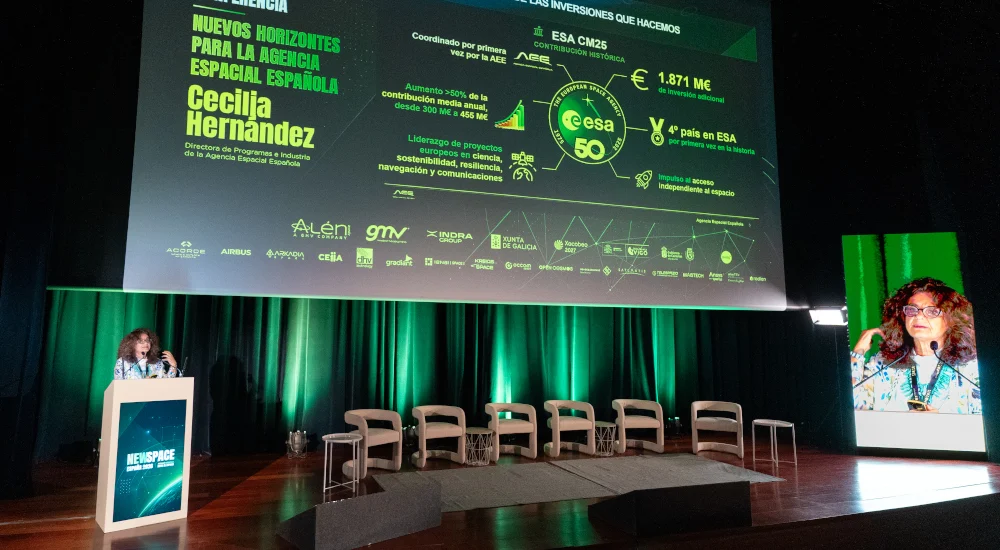
Cecilia Hernández, Director of Programmes and Industry at the Spanish Space Agency (AEE), delivered the conference ‘New horizons for the Spanish Space Agency’, in which she noted that the AEE’s next steps include developing a space strategy and policy, as well as continuing to steer technology programmes towards areas considered strategic for the future.
Hernández highlighted the strategic and security dimension the sector has acquired: “Space is the fifth domain”, an environment that is essential to society but also creates new vulnerabilities and protection needs. She also called for Europe to develop its own capabilities: “Autonomy does not mean independence, but when we are partners, we should not be in a position of inferiority.”
The programme continued with the conference ‘Space as a driver for the development of industrial capabilities in a dual-use environment’, delivered by General Vicente Torres, Deputy Director General for Defence Industrial Strategy at the Spanish Ministry of Defence, who highlighted the strategic importance of the space domain and Spain’s capabilities in areas such as optics, the ground segment, and the supply chain. Torres placed particular emphasis on “controlling space from space” and on the impact that space innovation can have on other sectors: “Not everything developed on Earth can be used in space, but what is developed in space may lead to advances on Earth.”
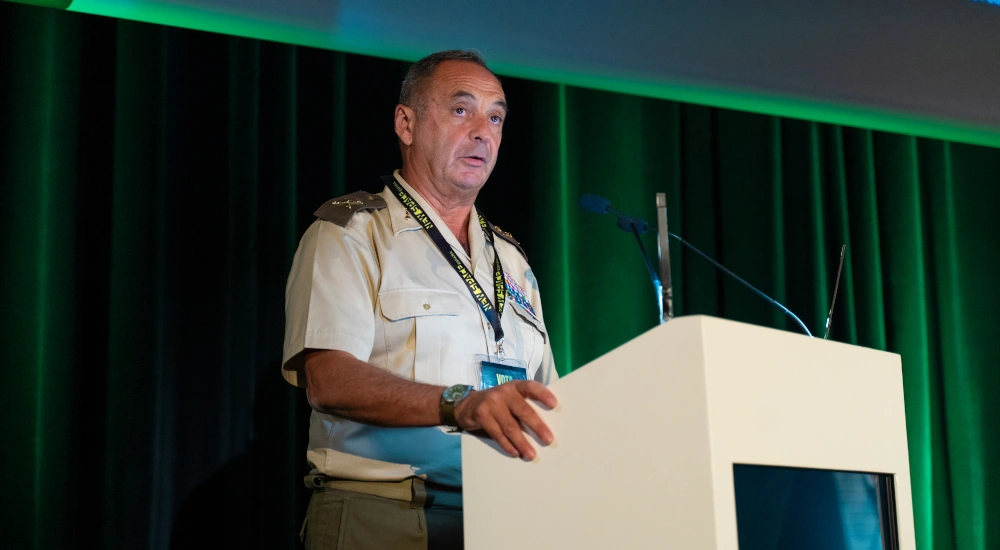
For his part, Carlos Fernández, CEO of Telespazio Ibérica, reviewed the transformation undergone by both the company and the sector itself in ‘Telespazio, 40 years bringing space closer to Spain’.
Later, Farrah Lisa Meghazi, Deputy Director General for Industrial Promotion and Business Land at the Xunta de Galicia, discussed the Strategic Initiative for Security, Defence and Aerospace 2025–2030, aimed at expanding Galicia’s business ecosystem through collaboration between public authorities, companies, and knowledge centres. Meghazi noted that the initiative will “prioritise manufacturing in Galicia” and “attract dual-use investment”, while also using strategic dialogue to identify companies’ short- and medium-term needs. She also emphasised the role of public-private collaboration.
The challenges facing Spain and Europe
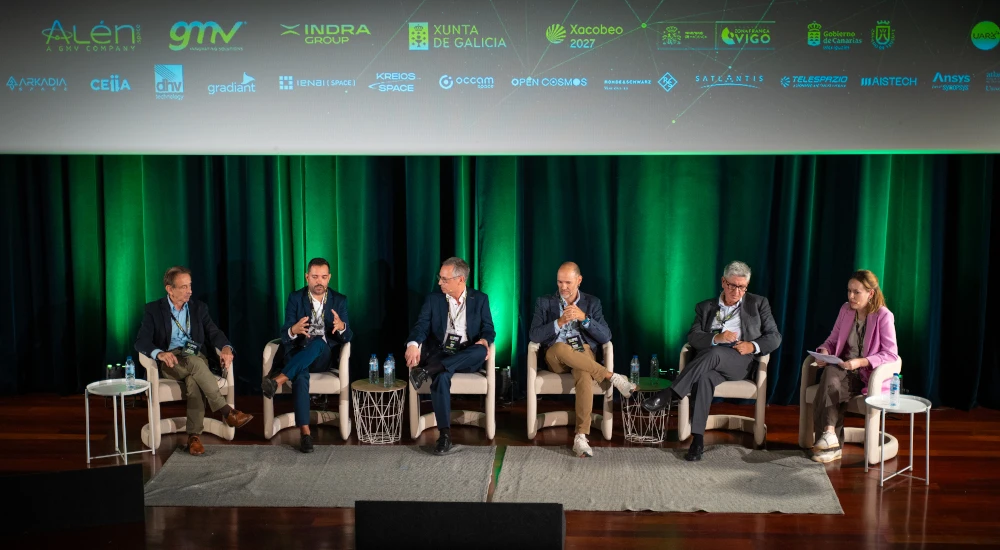
The final panel discussion, ‘Sovereignty and autonomy: the challenges facing Spain and Europe’, moderated by GMV, brought together representatives from EUSPA, the European Space Agency, and the Spanish Ministry of Defence. The discussion started from an increasingly evident reality: space is no longer solely a domain for exploration and science, but has become critical infrastructure linked to security and the economy. Participants discussed the growth of private-sector activity, the integration of space into international security, and the need to strengthen European autonomy in the decades ahead.
The experts also stressed the need to ensure that European space systems remain under European control and that the technologies required to develop them are available within the continent. They also warned of current dependencies on third countries for certain technologies and critical raw materials, and highlighted the importance of keeping services operational even in the event of potential attacks.
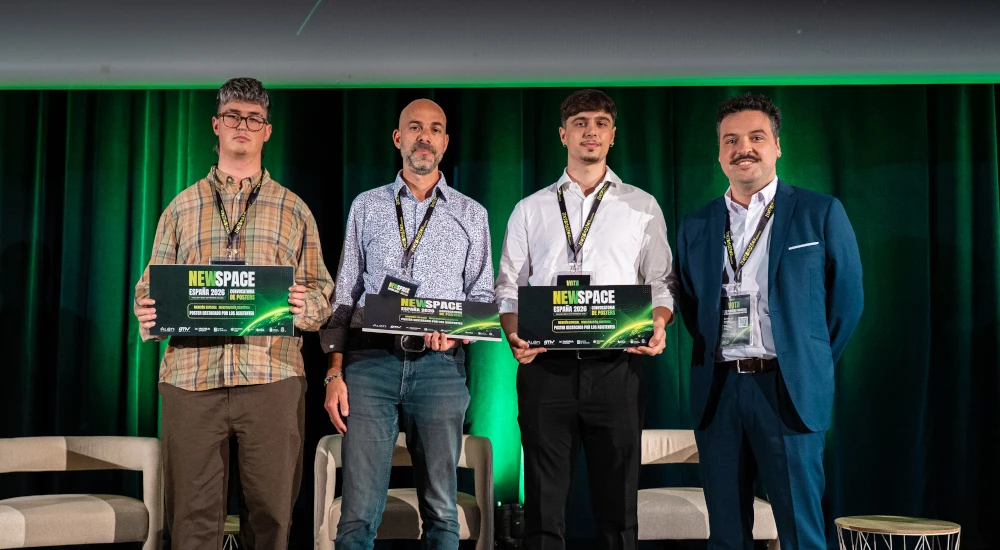
The final day also included the presentation of awards as part of the Call for Posters, created to showcase work, technical proposals, and initiatives related to the space sector. Antonio Vázquez, Head of Business Development at Alén Space, presented the awards.
The institutional closing was led by Margarita Ardao, Director General for Industrial Strategy and Business Land at the Xunta de Galicia, who highlighted the capabilities of Galicia’s business ecosystem to play a significant role in “a strategic industry with enormous growth potential in which Galicia has much to contribute.” She also noted that, as part of the Strategic Initiative for Security, Defence and Aerospace, the Xunta de Galicia had launched a call to select new strategic and technology partners for the development of dual-use technologies.
The fourth edition further established New Space España as a forum for meeting and dialogue among the leading players in the Spanish and European space ecosystem.