

Five satellites manufactured by Alén Space successfully launched into orbit for Sateliot’s Draconis mission
October 2, 2026
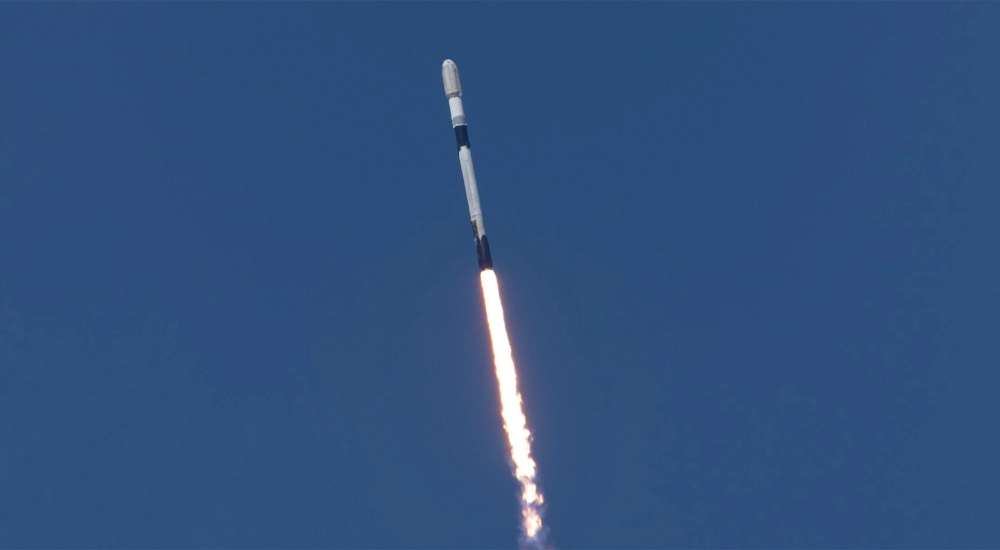
Five new small satellites manufactured by Alén Space have been successfully launched into orbit aboard a Falcon 9 rocket on SpaceX’s Transporter-18 mission. Developed for Sateliot, the European satellite telecommunications operator, the satellites are part of Draconis, its new mission to expand the capacity of its 5G NTN IoT network and increase connection frequency in areas without terrestrial mobile coverage.
For Alén Space, this mission marks another significant milestone in the evolution of its small satellite production capabilities. Following the four satellites manufactured for Sateliot in 2024, the company has now delivered five additional 6U CubeSats, significantly reducing development time while incorporating new technical capabilities. The maturity of the platform has enabled the satellites to be designed and manufactured in half the time required for the previous mission. Overall, Draconis reinforces Alén Space’s experience in the serial production of small satellites for commercial constellations.
With this mission, launched from Vandenberg Space Force Base in California, Sateliot has brought the total number of satellites launched since its foundation to eleven and takes a further step in the commercial deployment of a technology that has already been successfully validated.
The launch will reduce the time between satellite passes and increase the number of connection opportunities available to devices. On average, the number of daily passes will double, while revisit time will be halved. The five new satellites incorporate technological improvements, including an optimised payload and a more reliable and efficient system for storing data on board.
The new satellites also feature upgraded versions of the onboard computer and attitude control system, providing greater stability and enabling more efficient in-orbit manoeuvres, as well as memory systems with enhanced resistance to the harsh conditions of the space environment, particularly radiation.
The five satellites, which orbit at an altitude of 510 kilometres, incorporate the connectivity technology developed by Sateliot for its 5G NTN IoT network. Each satellite measures 20 x 10 x 35 centimetres, weighs 10 kilograms and has an expected operational lifetime of five years.
The satellites operate as telecommunications towers in space, extending mobile operators’ coverage through wholesale agreements and enabling them to provide Internet of Things services in areas beyond the reach of terrestrial networks.
Exolaunch was responsible for mission integration and logistics. The constellation’s ground segment also includes KSAT and Leaf Space as technology partners for tracking and control stations, while Comfone provides IPX connectivity services to enable the secure interconnection of Sateliot’s network with mobile operators.
The next generation
The five new satellites form part of a single constellation of more than 500 satellites that will evolve through successive technological generations, progressing from massive IoT towards higher-capacity and mission-critical services, including D2D capabilities.
From 2027, Tritó will mark the beginning of this technological evolution, incorporating 5G NR NTN technology and new capabilities for secure, higher-capacity and resilient IoT communications, supported by an innovative store-and-forward technology based on 3GPP Release 19.
Tritó will also feature an advanced multibeam digital antenna architecture with phased-array technology, capable of dynamically generating and managing multiple coverage beams.
According to Jaume Sanpera, CEO and co-founder of Sateliot, “the Draconis mission reflects very clearly where the company stands today. We have validated the technology, and we are now increasing capacity and service frequency to scale the service together with mobile operators. Our goal is to make satellite connectivity a natural extension of their networks wherever terrestrial coverage cannot reach and, on that same standardized and interoperable 5G infrastructure, evolve towards increasingly critical and resilient services. We are building a European telecommunications infrastructure based on proprietary technology and the 3GPP standard, with global ambitions.”
Guillermo Lamelas, CEO of Alén Space, added: “This mission is another key step in our close collaboration with Sateliot and in the development of the European 5G NTN ecosystem. Seeing these five satellites reach orbit confirms our ability to take on increasingly complex challenges and deliver the quality and reliability required by the most demanding satellite missions.”
Image credit: SpaceX